Contents:

Futurist Q&A: Jamie Metzl on the Changing World Order | Trends by The Hustle
Which industries do you foresee this crisis affecting the most in the long term?
This crisis is going to affect every industry, our entire economy, and the superstructure of the entire world.
What we’re seeing is not a little blip. This is not the equivalent of a snow day, where we just wait it out and the snow melts, and we go back to the world as it was. This is, in many ways, a fundamental break between the world before the crisis and the world after the crisis, and our economy is going to reset.

The Hygiene Industry: Opportunities and Changes | Trends by The Hustle
Picture this: It’s April 2021 and you’re meeting a friend for dinner. You can’t decide where to go because your favorite tapas place is closed — communal food is a thing of the past. You eventually agree on a spot, but it’s hard to get a reservation since restaurants are only accommodating half their normal number of patrons.
While you might make the 6pm train, you call an Uber instead because you don’t want to risk having to squash yourself into a crowded subway car. Your health and wellbeing are worth the extra money.
Perceptions and behaviors relating to hygiene have changed forever thanks to the coronavirus pandemic. Although we might not yet know exactly how things will change, one thing’s for sure: You can say goodbye to hugging and shaking hands with strangers. And you might not want to press that elevator button or touch that restaurant menu — at least not without sanitizing.

Why Josh Wolfe Wants to Back Society’s Outcasts | Trends by The Hustle
Josh Wolfe believes that society’s outcasts are the ones who hold the secret to human progress. And he’s dedicated his life to spotting them early.
Wolfe is the co-founder and managing director of Lux Capital, a New York City-based early-stage venture firm whose guiding philosophy is “the more ambitious, the better.” Lux recently raised $1B across two new funds to invest in frontier technology companies that focus on areas such as neurostimulation, nuclear energy, and synthetic biology. (You can see Lux’s portfolio companies, including biotech startup Kallyope and 3D virtual reality firm Matterport, in action here.)
Although Lux has maintained a relatively low profile over the years, the firm had a banner year in 2019 as two of its portfolio companies were scooped up in massive acquisitions. Auris Health sold to Johnson & Johnson for $3.4B, and CTRL Labs sold to Facebook for somewhere between $500m and $1B, producing big returns to the firm’s outside investors.
Solving the Interactive Podcast Mystery | Trends by The Hustle
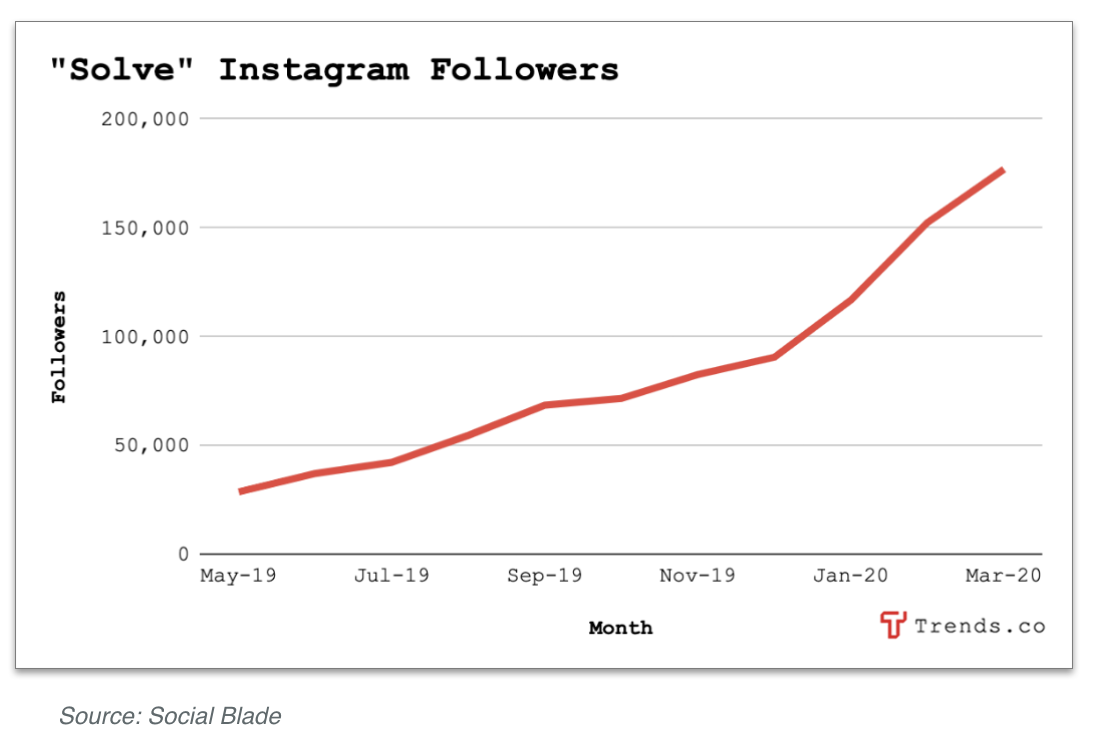
The Signal: You can add “interactive podcasts” to the list of interactive digital experiences that will stick in the post-COVID world. This new genre of media, which blurs the lines between narrative and gaming, was gaining popularity before the pandemic.
Solve is the first-of-its-kind interactive podcast in which listeners solve real-life true crime cases by using social media and other platforms to interview suspects and analyze evidence.
The show debuted as an original Snapchat show in 2018, reaching more than 30m viewers. In 2019 the company launched a podcast and raised $20m in funding. That’s almost as much as podcast network Gimlet Media raised ($28.5m) before it was acquired by Spotify for $200m in 2019.

10 Lessons From Small Businesses That Survived the Great Recession | Trends by The Hustle
Last week, we sent out a survey inviting businesses that made it through the Great Recession to tell us how they did it. We got hundreds of responses, creating a database that shows the mix of strategies they used to cope with the economic fallout.
The database includes the names of more than 100 companies, with detailed information about how their businesses were impacted, what they did to stave off financial difficulties, and the lessons they learned along the way. Trends subscribers can see the data here.
In addition, we analyzed more than 100 survey responses, pulling out 10 key takeaways that could help your company navigate uncertain times:

How 7 Thriving Businesses Pivoted in Hard Times |
This week we’re publishing our third (and likely final) installment of our “Coping with Coronavirus” series (here’s part 1 and part 2).
The final mini-case studies, all from new industries, cover 7 thriving businesses forced to pivot during an unprecedented era:
- Foodware: Final — a reusable foodware company that makes collapsible straws — was preparing to launch a reusable fork. But as the consumer landscape shifted sharply, the company decided to launch a Kickstarter campaign for much-needed reusable sanitizing wipes. (Sign me up for a box…)
- Family Club: The Lane — a social club for kids and their families — opened a 7,880 square-foot space just as coronavirus was breaking out in the US. It quickly created a virtual version of its service to support its new members and avoid layoffs.
- Nursing: Next Move — an agency that places travel nurses — has been rapidly hiring administrative staff to keep up with demand for its services.
- Veterinarian: Pawzy — a search tool that connects people to vets in their area — launched a telehealth alternative as its physical location was seeing decreased traffic. (See our Signal below on telemedicine.)
- College Education: Knack — a peer-to-peer tutoring platform — typically works with students in-person. But with social distancing measures, the company is promoting its online-only features and giving away its technology to impacted colleges that were forced to close their in-person tutoring centers.
- Sport Beverages: LIFEAID Beverage Company — a beverage business that makes functional sports drinks for athletes — lost one of its biggest distribution channels with the closure of gyms. But a surge in sales from other outlets has helped it reinvest profits back into its partner gyms to help them weather the storm. (We’ll drink to that!)
- Transportation: Swoop — an event transportation app — saw its business evaporate overnight and is pivoting to develop a business management app for its operators.
10 Minute Read
* * *
A Reusable Foodware Company Pivots to Wipes
The business: A reusable foodware company that makes collapsible straws; before the coronavirus pandemic hit, the company was about to launch a travel fork.

How 6 Businesses Managed a Coronavirus Pivot |
Last week, we profiled the business impact that coronavirus is having on 6 of our Trends community members. The mini case studies covered the marketing, events, cleaning, beauty, manufacturing, and newsletters industries.
This week, we followed up with 6 more readers across completely different industries to see how their businesses are coping:
- Restaurant: Fusian — a fast-casual sushi chain based in Ohio — has pivoted to grocery delivery amidst mandatory restaurant closures.
- Furniture: Deskmate — a London-based portable standing desk company — is sourcing new suppliers to meet rising demand for its product as people are forced to WFH.
- Printing: Everest Direct Mail and Marketing — a print shop that offers integrated direct mail marketing services — is trimming operational expenses, shifting future investments, and “collaborating down the line” with suppliers to help weather the storm.
- Catering: Topnotch Events — a catering and staffing company based in New York City — has seen business completely dry up and decided to make a hard coronavirus pivot towards a longtime passion: teaching theatre to kids.
- Pets: Pets in the City — a pet care company based in West Los Angeles — is adjusting to social distancing measures by experimenting with virtual dog training and digital content.
- Microbrewery: Gloucester Brewing Company — a small-town microbrewery specializing in ales — closed their taproom and switched to crowler and growler fill.
10 Minute Read
* * *
One Restaurateur Has a Pitch: To Stay Afloat, Become a Grocer
The business: Fusian, a fast-casual sushi chain based in Ohio
Deep Dive: How 6 Small Businesses Are Confronting Coronavirus |
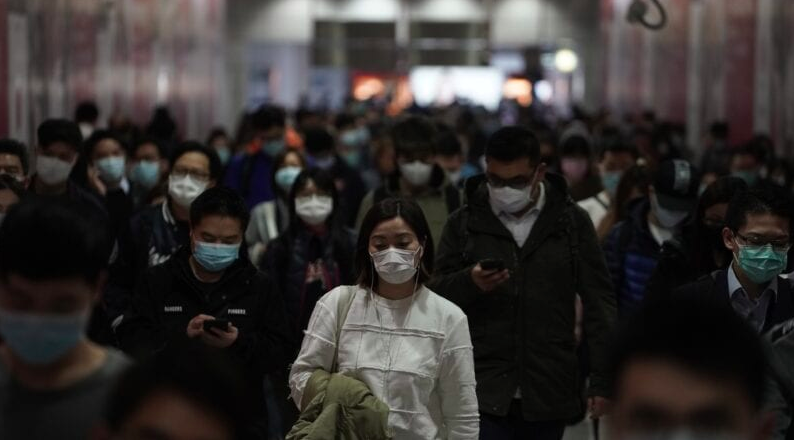
In this article, we dive deep into 6 companies, exploring how they’re weathering the fallout from the novel coronavirus. The report looks at industries across the spectrum, zeroing in on the specific problems and solutions faced by these operators:
- Marketing: Scout Collective — a brand strategy and digital marketing studio — is helping clients get the most impact from their marketing dollars by crafting messages around loyalty, community, and empathy.
- Events: SnapBar — a custom photo and video booth rental company — is trying to navigate widespread event cancellations by repurposing its existing resources to launch new products.
- Cleaning: Hip Maids — an on-demand cleaning service — is having difficulty meeting new business requests as school closures are forcing its workers to stay at home.
- Beauty: The Sparkle Bar — a makeup and beauty studio — is transitioning to “tele-cosmetics” as social distancing is keeping customers away.
- Manufacturing: Get It Made — a manufacturing-as-a-service firm — has been able to weather the manufacturing slowdown with a diversified supply chain.
- Newsletter: Intelligent Prepper — a weekly newsletter chronicling threats including everything from riots to volcanoes — has become a useful coronavirus resource while also keeping a long view into the type of content that an audience will want when the coronavirus pandemic passes.
10 Minute Read
* * *
Amid Widespread Cancellations, a Marketing Agency Looks to Stays Relevant by Building Communities
- The business: Scout Collective, a brand strategy and digital marketing studio
- The challenge: Projects placed on hold; clients’ marketing budgets will likely shrink
- The solution: Develop brand messaging that builds customer loyalty, community, and empathy

Troy Monroe (center), with two of his employees (via Monroe)
Early last week, Troy Monroe received a Facebook notification highlighting a memory from 5 years ago. It was a post he had written about leaving a full-time job and how nervous and excited he was to launch Scout Collective, his brand and digital marketing studio.

These Anti-Spam Solutions Mint Money by Blocking Scammers |
This article is part of our “Brainstorm Breakdown,” in which we riff off ideas Sam & Shaan have discussed on their “My First Million” brainstorms. Here, we dive deep into spam tech that’s designed to fight the scourge of unwanted calls and texts.
This report was based on the February 19, 2020 episode of “My First Million” (32-minute mark).
Sam and Shaan were discussing business models that save people money through “small hacks.”
They brought up a number of interesting anti-spam companies, including Sweden-based anti-spam firm Truecaller.
5 Minute Read
* * *
What is Truecaller?
How the World’s Largest Collectibles Auction Business Makes $800m+/Year from Nostalgia |
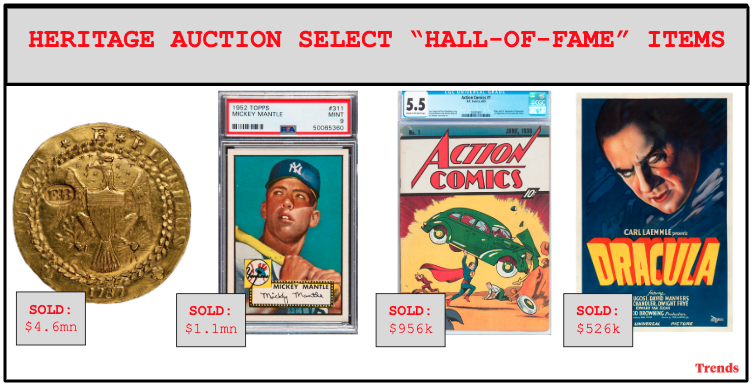
This report is part of our “Brainstorm Breakdown,” in which we riff off ideas Sam & Shaan have discussed on their “My First Million” brainstorms. Here, we explain how to make money from nostalgia by breaking down the growing business of Heritage Auctions.
This report was based on the February 20, 2020 episode of “My First Million” (53-minute mark).
5 Minute Read
* * *
What is Heritage Auctions?
Founded in 1976, Dallas-based Heritage Auctions (HA) is the world’s largest collectibles auctioneer. With additional locations in New York, Beverly Hills, San Francisco, Houston, and Geneva, HA is also the world’s 3rd-largest auction business (behind Christie’s and Sotheby’s).