Contents:

A Wild Week of IPOs: Lessons from Sumo Logic and Others | Trends by The Hustle
In a single day last week, a small army of software companies filed to go public.
The software sector is 🔥 for good reason: The 18 players that went public on US markets this year have climbed ~91% since their debuts — compared to 52% for practically everyone else.
What should businesses take away from the SaaS splash? A few growth lessons:
Meet the ‘Soonicorns’: 6+ Business Ideas Inspired by France’s Hottest Startups | Trends by The Hustle
When President Emmanuel Macron came to power in 2017, the former investment banker vowed to make France “a nation of unicorns.”
A little more than 3 years on, France’s startup scene is benefiting from new measures designed to attract young businesses, including:
- Tax reforms, such as a flat tax on dividends.
- A revamped visa system including a new “Tech Visa” that puts non-EU startup employees, founders, and investors on a fast track to obtain a residency permit.
- New rules on stock options that make it easier for French startups to lure talent away from US rivals and big corporations.

5 Founder Insights From the Inc. 5000 | Trends by The Hustle
What does it mean to land a spot on the Inc. 5000 list? Ask a dozen different people, and you’ll likely get a dozen different answers, ranging from solemn admiration (“It means you have a great company”) to wry skepticism (“It’s nothing but a marketing ploy”).
Regardless of where you fall on that spectrum, what’s certain is that the Inc. 5000 represents a ton of work on behalf of the founders and companies listed on it. All told, the companies on this year’s list account for ~$209B in revenue and ~600k employees.
Last year, we did a deep dive on all 5k rows of the Inc. 5000, which ultimately became the basis for our Inc. 5000 Signals database.

Lessons from Japan: 5 Trends You Can Trade On | Trends by The Hustle
This is the first in a series of articles in which we investigate trends in different parts of the world, show how companies are responding to those trends, and provide lessons you can apply to your business.
Anyone lucky enough to have traveled to Japan will know why we start our journey with this fascinating Asian island. In this piece, we’ll cover 5 key characteristics of the country that you can learn from:
- Convenient, healthy food: We extract learnings from a culture that has mastered healthy eating and how to apply impeccable food hygiene standards in a post-COVID world hyper-focused on food safety.
- J-Wellness: We uncover opportunities to investigate societal tendencies based on physical and mental wellness and bring them to the West.
- Automation-based experiences: We show how one of the most technologically advanced countries in the world has integrated robots into everyday life and which automated experiences might take off elsewhere.
- Party-for-one culture: As single-occupant household rates continue to rise around the world, Japan serves as a model of what a “super solo” society of the future could look like.
- And our favorite recession-proof industry… pets: Even though there are relatively few pet owners in Japan, they are notorious for pampering their pooches. There are opportunities for entrepreneurs to capitalize in countries where pet owners are in the majority.
What Makes Japan Different

Window Garden: A Mega Home Business Built on MicroGreens | Trends by The Hustle
When Frank Catalano’s doctor handed him a terrifying diagnosis — prostate cancer, 5 years to live — he did not expect to be handed his next multi-million dollar business idea as well.
Refusing to undergo radiation therapy after surgery, Catalano and his wife Lisa explored other options.
The couple switched to a plant-based diet and eventually discovered something called microgreens.
The Modern Junto: How Executive Peer Groups Print Millions | Trends by The Hustle
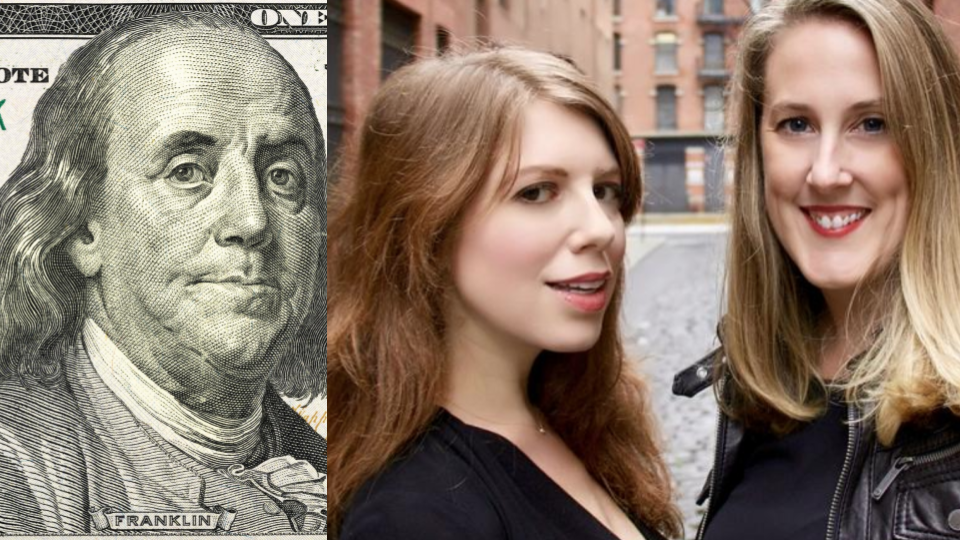
(Lindsay Kaplan & Carolyn Childers are printing Benjamins with their modern, women-centric executive peer group, Chief)
Summary
- In 1727, Ben Franklin started a group of fellow business owners he called The Junto. They met regularly to promote mutual learning, and this model has lived on to today in the form of executive groups.
- Executive groups can be lucrative, with several generating $100m+ in annual revenue from a mixture of membership dues and paid events.
- The primary value: Meeting regularly with a trusted cohort. Entrepreneurs’ Organization (EO), for example, hosts regular forums, where curated groups of 6-10 meet to discuss business and personal growth. Nearly 90% of EO members take part in forums, with some investing additional time and money to travel to in-person gatherings.
- Groups live or die by the quality of their member interactions. They maximize this by:
- Vetting members, often by a mix of quantitative and qualitative measures (i.e., company size, revenue, age, as well as culture fit and personality as judged by live interviews).
- Training volunteer leaders to manage group meetings.
- Building a purposeful culture around vulnerability, giving, and confidentiality that allows for high-quality interactions.
- Many still suffer from a lack of diversity. Women, for example, make up ~50% of the workforce, but only 7.6% of Fortune 500 CEOs. This lopsided representation transfers to peer groups too, where women and other underrepresented leadership demographics have a hard time finding the support they need. One of the fastest-growing organizations — Chief — has zeroed in on this need, offering a space specifically for high-powered female leaders to meet and share ideas with one another.
Table of Contents
1. Intro
Recently, we wrote a deep dive on the business behind paid communities, looking at companies like Creative Mornings and Harley-Davidson to figure out what draws people to those brands, how the communities around those companies build value, and why they’re important for helping a business survive tough economic times.
Of those, the largest we found was Harley-Davidson’s Harley Owners’ Group (H.O.G.), which generates tens of millions of dollars per year in revenue.

12+ Niche Business Ideas from Our Small Business Database | Trends by The Hustle
The Trends SMB Database offers a snapshot of the financials, insights, and lessons learned by 200+ founders across a range of industries. We ask business owners and operators a number of questions, including:
How did you get your first customer?
This question is designed to show the broad range of ways that businesses make that all-important first dollar. It doesn’t matter whether you’re first starting out or celebrating your millionth customer — there are ideas in here you can mine for your own use.
The database draws from both budding upstarts and large, established businesses alike, with more than a handful of multimillion dollar companies. Indeed, Pearl Valley Cheese (profiled below) is nearly 100 years old and has revenues of $25m per year.

How Top Job Boards Make Money | Trends by The Hustle
Even with the growing importance of technology, people play a pivotal role in the success of any organization. A recent study by the consulting firm Korn Ferry, along with the Centre for Economics and Business Research, put the global economic value of human capital at $1.2 quadrillion, more than 2x the value of physical capital like technology. That figure is expected to grow in the coming years.
At the same time, the widespread adoption of remote teams has given companies the ability to work with high-quality talent anywhere in the world. But this freedom brings a new challenge: how to find talent — and be discovered — in a sea of noise.
For help with this, companies are increasingly turning to online talent marketplaces and internet job boards.

How to Put Down Roots in the Online Plant Business | Trends by The Hustle
Last fall, as we were experimenting with new forms of content, we recorded a session with Sam on how he would build a direct-to-consumer plant brand. We didn’t originally plan on sharing this audio publicly, but in the spirit of experimentation, we thought you might benefit from hearing his thought process in his own words.
Listen to the audio here:

Widen the Moat: How and Why to Build a Strong Brand Community | Trends by The Hustle
Think about the biggest sports fan you know. Has that person ever bought a different brand of dish soap because it was on sale? Probably.
Now, ask yourself this: Would they ever switch teams just because another team’s jerseys were on sale? No way.
That is the power of a strong community.