Contents:

How Away Travel Got Their First Few Customers | Trends by The Hustle
This year Away, a suitcase startup, raised $100m in new funding at a staggering $1.4 billion valuation. The company has raised a total of $181m and is rumored to have over $125m in revenue. The stats alone are quite amazing.
But what makes Away particularly special is that the company was founded in 2015 and is only 4 years old.
At one of our events, when Away was only two years old with $20m in revenue and 60 employees, I interviewed founder Jen Rubio and asked about their first few months of business and how they generated so many sales as quickly as they did.

Stories Told Through Texts Helped This App Win 100m+ Teens | Trends
Young people crave stimulus — and the modern world obliges. Mobile phones and the internet provide constant streams of them: bright banner ads, colorful games, bingeable TV shows, infinitely scrolling content feeds. A text message buzzes and dopamine receptors in the brain respond with a quick biological fix.
According to a Nielsen analysis of the communication habits of people aged 22-37, younger brains have high multi-sensory processing capacity which leads them to seek out multi-sensory communications, especially ones that involve interaction. Touching, tapping, scrolling, and liking are the language of stimulating mobile interaction.
For years, reading on smartphones was largely devoid of the stimulating interactions we find elsewhere on our devices. But that’s changing, thanks to chat fiction and interactive story games — two fast-growing media formats introduced in the last 3 years.
Cashing in on Canvas: The Sneaker Resale Market | Trends by The Hustle
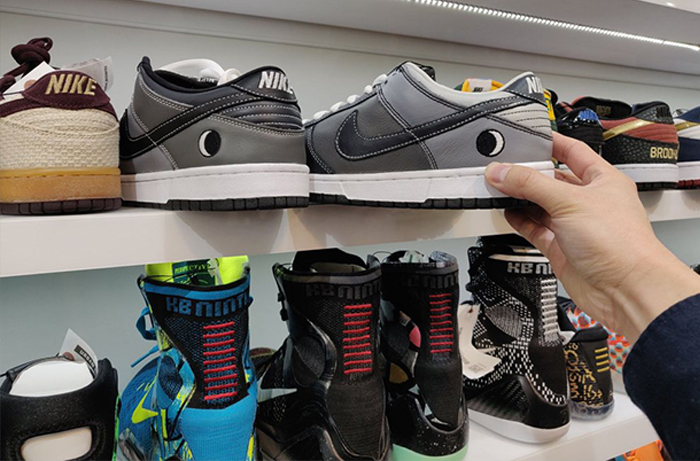
First, you need a bot. They go by names like Easycop, SoleSlayer, and RSVP Kingz, and their automated software promises to help you snag the latest/greatest sneakers a few crucial seconds faster than mere humans. Sure, bots aren’t cheap — nor, by the way, are they smiled upon by Nike and Adidas — but what’s a few hundred bucks to a budding sneaker entrepreneur?
The secondary market for limited-release sneakers has blown up in the last few years. Gone are the days when Jordans reigned unchallenged. Now sneakers you’ve probably never heard of (Air Foamposite One Tianjins, anyone?) sell for more than a package trip to the Caymans. An entire industry has sprung up to service the obsession, with apps like GOAT, Stadium Goods, and StockX, the latter of which allows you to chart price fluctuations and pretend your shoe rack is a hedge fund.

Ep 2: Blogging His Way To $9M in Cash - Ramon Van Meer | Trends by The Hustle
Shaan Puri: At this point it’s a money printer.
Ramon Van Meer: I was very lucky that at in content you would with very small team, very low overhead.
Shaan Puri: We’re talking monthly, you’re pulling in?

The $33B market staring you in the face | Trends by The Hustle
A decade ago, billboards were relics of the past, reserved for Cracker Barrels and gas station exits. Today, they’re one of the fastest-growing ad commodities on the market.
As other traditional media (broadcast television, radio, magazines, newspapers) flounder, billboards have adapted to the times by embracing, and integrating, the very technologies that threatened to make them irrelevant.
How has one of the world’s oldest advertising mediums survived the onslaught of a digital revolution? And how can entrepreneurs take advantage of the growth?QUICK FACTS
- Billboards are a $29B market, and are expected to grow to a $33B market (a 12% increase) by 2021.
- Billboards are cheaper (on a CPM level) than online alternatives.
- Entrepreneurs see opportunities to create new forms of digital outdoor ads and streamline the process of buying billboard space.

A snapshot of the market

Online Plant Sales are Set to Bloom | Trends
Americans spend $48B a year on plants. But there are few direct-to-consumer (DTC) retailers that do $10m+ a year in sales.
More than 80% of plant sales last year occurred in big box stores like Home Depot and Lowe’s. But entrepreneurs are bullish on the online plant business, confident they can exploit market niches the mega retailers have ignored.
Our analysis of the online houseplant market shows it has the potential to sprout into a $700m+ annual business.
The Big Business of Drug Patent Expirations: Hims | Trends
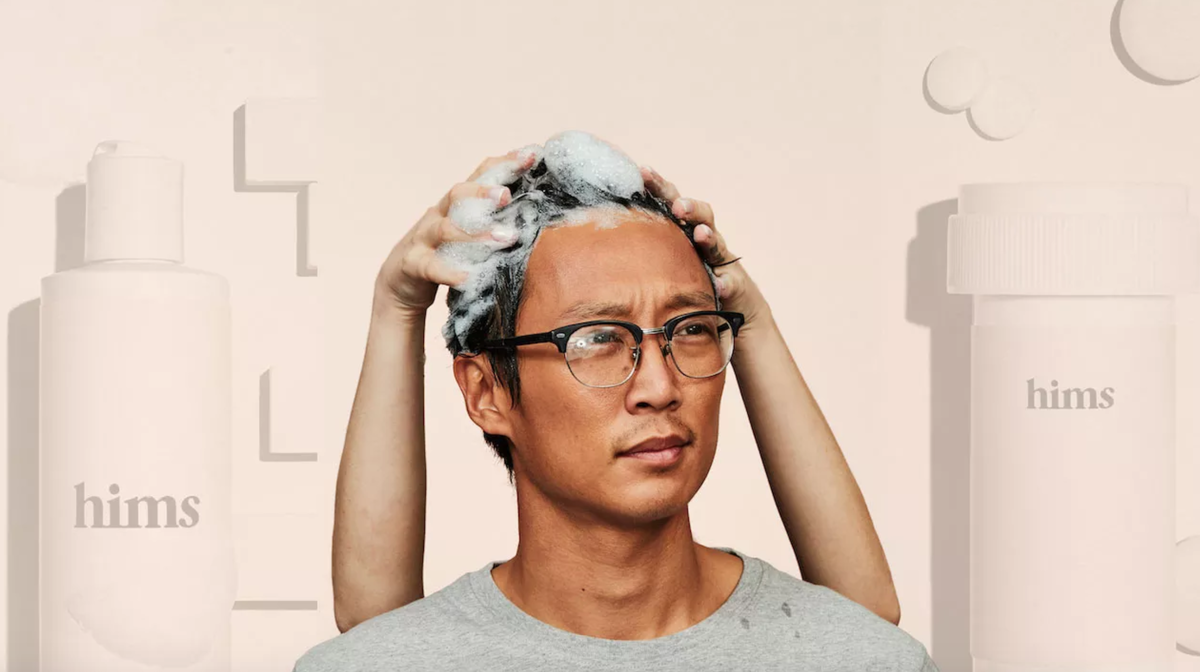
In the summer of 2016, Andrew Dudum learned that the patent on one of the most profitable drugs in history was set to expire the following year. At the same time, many states were loosening telemedicine laws, allowing doctors to prescribe pharmaceuticals online.
By the end of 2017, the telehealth sector would account for $21B in revenue. The market is expected to grow to more than $93B by 2026. To Dudum, those changes signaled blockbuster potential.
Dudum — best known for founding Atomic, a startup incubator backed by tech titans Peter Thiel and Marc Andreessen — had his concept ready 14 months later. In November 2017, he launched the direct-to-consumer men’s health business, Hims, to sell prescription erectile dysfunction pharmaceuticals online.

Check Out the Latest 'Signals,' Our New Feature That Highlights Fast-Growing Trends | Trends by The Hustle
Each week we send out a handful of data points that we’re tracking, explaining what they mean and how you can use that data to your advantage. We’ll alert you to early-stage concepts, businesses, and apps so you won’t miss out on the latest opportunities.
3 Signals are sent with each weekly email. We’re also building a database where you can sort through past Signals, as well as other Signals that we’re looking at. You can search our early version of that database here. The next iteration will be built out a bit better, but please use that sheet for now.
This post will be updated every week with new Signals until our searchable tool is properly built out.