Contents:

The End of Aging | Trends by The Hustle
What you need to know:
- Aging is far more likely to contribute to disease than typical vices, and scientists have been working on methods, such as tissue regeneration, to keep us healthier for much longer. Harvard professor David Sinclair believes in the near future the average life expectancy will increase from 83 to 113 and that people will not decline as rapidly in their last years.
- Some $800m was invested in anti-aging startups last year, compared to ~$100m in 2013.
How you can capitalize:
- Improve wearable technology: Instead of measuring heart rates, blood sugar or other important markers, new wearables will signal to users how to improve health and longevity on a daily basis, like by eating a certain meal. These devices also might be implanted under the skin.
- Rethink society: If we’re living much longer, healthier lives, more attention will be paid to seniors than ever before. The exercise industry will boom, and senior entrepreneurs, already common, will become more frequent.
- Consolidate your next startup (and your skill set): Mehmood Khan, Life Biosciences CEO, says technology, academia, the medical field and ecommerce are going to meld like never before, in part because of the anti-aging movement. “Gone are the days where you’re a businessman or engineer or academic…In the modern age those lines are blurred and rightly so.”
* * *

The Tokyo Digital Museum That Banked $100m | Trends by The Hustle
What you need to know:
- People are flocking to digital museums in Asia that are utilizing proprietary technology to develop viral experiences, driving $100m in their first year.
- Traditional museums are heavily dependent on capital-intensive assets which are proprietary due to scarcity. The Tokyo digital museum flips this model on its head by building technology that can be duplicated many times over, resulting in far more attractive margins.
How you can capitalize:
- Opportunists can partner with digital collaboratives to create new digital experiences. The beauty of technology-based experiences is in the scalability, so the end result could be a 100,000+ square-foot space like Borderless or a much smaller digital pop-up.
- Others can get involved with the tech, by developing interactive and responsive artwork like teamLab has, and then selling or licensing the technology to other companies.
- Leverage the concept of interactive digital experiences to build out entirely new concepts, ranging from interactive concerts to dynamic education tools.
* * *

Daniel Kane on the Rise of Skinny Wallet | Trends by The Hustle
Daniel Kane was a 19-year-old student at UC Santa Barbara when he launched the skinny wallet company, The Ridge.
In 2013, he prototyped the first version of what would become one of the best-selling direct-to-consumer wallets, scraping together $1,500 to get a Kickstarter campaign going.
When he started, the ecommerce landscape had yet to be flooded with hundreds of copycat products. Advertising campaigns for the Ridge were much more cost-effective, at times almost 8x cheaper than today.

The $100k-a-Year Franchise Opportunity Helping Small Businesses Grow |
Have you ever wanted to create your own podcast? How about one that brings in $100k a year while helping small businesses grow?
Then you should meet Lee Kantor, founder of Business RadioX, an Atlanta-based small-business radio/podcast network that can be replicated in any market. What started as an Atlanta radio show––Mr. Fitness and the Fat Guy––has evolved over the past decade into a 9-city franchise, with plenty of room to grow.
Kantor, a longtime marketer, has turned traditional radio advertising on its head by offering local businesses an opportunity to host their own podcasts that target hard-to-reach audiences. His company grew out of his frustration with seeing how hard it was for small businesses to get any attention in the press. Unless your last name is Bezos or Musk, there’s no guarantee your company will ever get a media mention.

Mental Health Tech Enters its 'Golden Age' | Trends by The Hustle
What you need to know: Over 40 million Americans suffer from mental illness, including depression and anxiety, with 1 in 5 saying they have an unmet need. In 2018, over 100 deals in this space amounted to $800M in funding, up over 150% YoY.
How you can capitalize: Areas of opportunity include targeting the intersection between big data and mental health, especially in the workplace, niching down on specific conditions and creating popular remote therapy apps or wellness apps for non-English speakers.
*****

The REIT Champion: RealtyMogul CEO Jilliene Helman...
Jilliene Helman is all about the Real Estate Investment Trust, or REIT. She is the 32-year-old CEO of RealtyMogul, an LA-based commercial real estate investing platform with over $2B in assets.
It works like this: With as little as $1k to invest, customers join a group of other investors on commercial real estate properties studied by RealtyMogul, getting paid back in monthly or quarterly dividends if the property is successful.
Helman quit her corporate job as VP of wealth management for Union Bank after noticing that all of her wealthiest clients were involved in real estate investing.
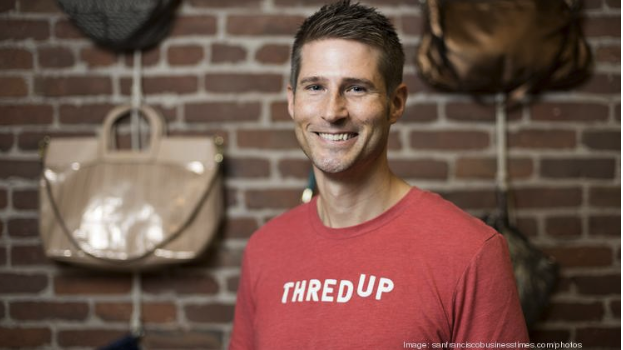
James Reinhart on Turning Trash into Treasure in the Resale Industry |
In 2009, long before the “resale market” had picked up steam, thredUP incorporated. Now, 10 years later, they’ve raised over $300m in funding, including a new $175m round announced in August. They also introduced a new platform powering apparel resale for retailers and brands.
But it took Reinhart awhile to understand thredUP’s unique advantage. How’d he do it? By constantly talking to his customers — and asking a few key questions. We talked to Reinhart about how thredUP found its footing, and how he created demand for a product that, at the time, no one was talking about.
Takeaways
- Want to find out who your main competition is? Ask your customers what they would use if your company didn’t exist
- To win at a secondhand marketplace, make it as frictionless as possible for sellers
- In an early-stage market, competitors are your friend: The more players, the bigger the pie
What inspired you to get into the resale industry?

Check Out Signals, Our New Feature That Highlights Fast-Growing Trends | Trends by The Hustle
Each week we send out a handful of data points that we’re tracking, explaining what they mean and how you can use that data to your advantage. We’ll alert you to early-stage concepts, businesses, and apps so you won’t miss out on the latest opportunities.
3 Signals are sent with each weekly email. We’re also building a database where you can sort through past Signals, as well as other Signals that we’re looking at. You can search our early version of that database here. The next iteration will be built out a bit better, but please use that sheet for now.
This post will be updated every week with new Signals until our searchable tool is properly built out.

The Future is Female Pleasure | Trends by The Hustle
See the necklace pictured above? Surprise, it’s a vibrator.
These companies have names like Crave, Unbound, Dame Products, and Maude. Their wares include sex toys like the “Fin,” the “Bender” and the “Mini Marvels Marvelous Flicker,” with features like USB charging and microbotics. And all of these companies were started by women.
While 70% of legacy sex toy companies are run by men, women now account for the vast majority of sex toy startups. Why? Because the sex industry is huge, and since its inception, its products have been driven by men, for men… Until now.

Gumroad Founder and Viral Sensation Sahil Lavingia Riffs on the Future of Work, Failure, and How to Build an Audience | Trends by The Hustle
Pinterest hired Sahil Lavingia to build its iPhone app in 2010. He was 19, a college dropout and a self-taught coder. His stock options would end up being valued around $40m.
In 2011, Lavingia, then 26, quit to start Gumroad, an ecommerce tool for selling creative products. He thought it was a billion-dollar idea, but the path to success has not been nearly as smooth as it was at Pinterest. Though Gumroad has helped over 40k creators make a total of $213m, Lavingia has lately been getting attention for getting specific about the difficulties of building a startup.
Every month, Lavingia publishes Gumroad’s financials on Twitter. Recently, he gained greater fame for a viral Medium story, publishing in February the Medium post Reflecting on My Failure to Build a Billion-Dollar Company. More than 700k people have read it.